Do Retinal Boosters Actually Tighten Skin? A Buyer's Reality Check
Retinal isn't retinol, and it's not a face-lift in a bottle either. Here's what the research and the ingredient list actually tell you.
ReviewHubNow Editorial Team
ReviewHubNow Editorial Team
This is not medical advice. This is editorial research, not a clinical recommendation. Talk to your doctor or pharmacist before starting, stopping, or changing any supplement or medical product, especially if you take medication or manage a health condition.
Before you spend money on a retinal booster, here's what you need to know: the word "retinal" is doing a lot of marketing work on that label, and most people buying these products don't actually understand what they're getting versus what they think they're getting.
Retinal, short for retinaldehyde, is a genuine vitamin A derivative and genuinely different from the retinol in drugstore serums. Skin converts retinol into retinaldehyde, then retinaldehyde into retinoic acid, which is the form that binds to receptors and does the work. Fewer conversion steps mean retinal starts closer to the finish line.
Research comparing the two suggests retinaldehyde can produce visible improvements in fine lines and texture faster than retinol, which the biochemistry supports even though no exact timeline is universally agreed. Our guide to serums for sensitive skin covers the conversion pathway and how to introduce one.
What does tightening actually mean here?
Not what the word implies, and this is the expectation worth adjusting before buying. Retinal boosters do not tighten skin the way a radiofrequency device or a surgical procedure does. No mechanical pulling occurs.
What retinal does is stimulate fibroblasts to produce more collagen and elastin while accelerating cell turnover in the epidermis. Across eight to twelve weeks of consistent use, that appears as skin looking firmer, more even in texture and less crepey, most noticeably around the jawline, neck and under-eye area where laxity shows first.
Anyone expecting jowls to lift the way they would after a facelift will be disappointed and will blame the product rather than the expectation. These work best as long-term collagen maintenance rather than as a rescue for skin that has already lost significant structural support. Genetics, cumulative sun damage and age-related fat loss all influence the outcome more than any topical can overcome.
Is retinal suitable for sensitive skin?
With the right concentration and formulation, often yes, though the ingredient can irritate more than retinol at equivalent strength precisely because it is more bioactive. Well-built products offset that with lower percentages, encapsulation and soothing co-ingredients such as panthenol or centella asiatica, which is why formulation matters as much as the active itself.
Start in the 0.05% to 0.1% range. Higher strengths without a gradual build produce redness, flaking and the sort of irritation that leads people to quit within a fortnight and conclude that retinoids do not suit them. Usually they do, and the introduction was simply too aggressive.
- Use it two or three nights weekly rather than nightly, building tolerance across a month before increasing.
- Apply to completely dry skin, since damp skin increases penetration and irritation.
- Follow with moisturizer and wear sunscreen the next morning, because retinoids increase photosensitivity.
- Patch test on the inner forearm for 48 hours first if you have reactive skin, rosacea or eczema.
Active rosacea or a compromised barrier means postponing this category until the underlying condition is controlled, ideally with a dermatologist's input. Retinoids applied to inflamed skin generally worsen the inflammation before anything improves.
What should you look for on the label?
A disclosed concentration, first of all. Products leading with phrases like advanced complex or next-generation formula while withholding the percentage are hiding information rather than protecting a trade secret.
Avoid formulas stacking retinal with strong exfoliating acids such as glycolic or salicylic in the same bottle. That combination compromises the barrier on sensitive skin regardless of how appealing the packaging looks.
Worth paying for: stable packaging, since retinal degrades in light and air and opaque airless pumps genuinely protect it, alongside a stated concentration and supporting ingredients that calm rather than compound irritation. Our review of the evidence on boosters for loose skin reaches the same conclusion: formulation discipline beats a long ingredient list.
How much should you spend?
Far less than the luxury tier charges, because the active and its concentration matter more than the name on the bottle. Mid-range products with a clearly stated percentage and a clean supporting formula compare well against expensive versions padded with fragrance and marketing language rather than functional ingredients.
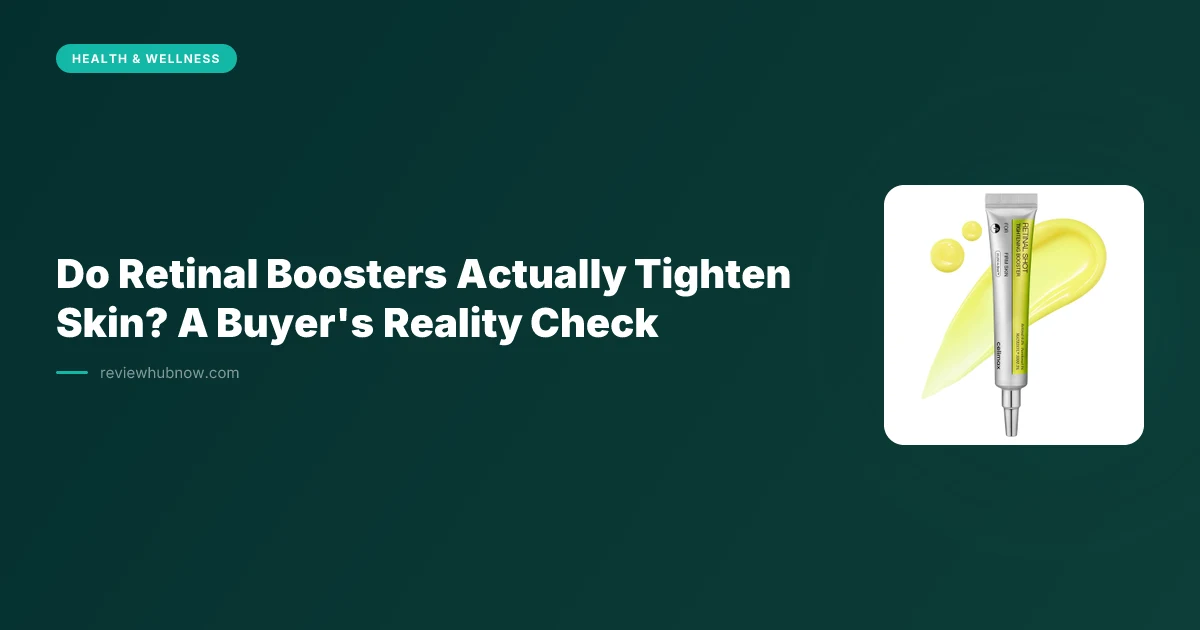
Celimax's Vita A Retinal Shot Tightening Booster is a reasonable example of the category done sensibly: disclosed retinal content, a simple supporting formula and no unnecessary irritants, which is the profile to look for when new to retinoids or working with reactive skin.
Who should buy a retinal booster?
Anyone whose concern is early texture change, fine lines or general firmness maintenance in their thirties or early forties. Start slowly and allow three full months before judging the result.
Anyone dealing with significant laxity from major weight loss or advanced photoaging should treat retinal as one component of a maintenance routine rather than the solution, with expectations anchored to biology instead of the before-and-after images on a product page.
Anyone whose skin reacts to new detergent or a change of season should begin below the recommended frequency, or speak to a dermatologist first, rather than committing to a bottle destined to be used twice and abandoned in a drawer.
Editor's Pick
Affiliate link. We may earn a commission if you buy through it, at no extra cost to you.

More from Our Editors
Hook-On High Chair vs High Chair for Small Apartment
By ReviewHubNow Editorial Team
Robot Vacuum Mop or Wet Dry Vacuum for Hard Floors?
By ReviewHubNow Editorial Team
Does Noise Cancelling Work for Office Chatter?
By ReviewHubNow Editorial Team