Robot Vacuum Mop or Wet Dry Vacuum for Hard Floors?
Choosing a robot vacuum mop or wet dry vacuum for hard floors comes down to one question most guides skip: is your mess loose debris or dried-on gunk?
ReviewHubNow Editorial Team
ReviewHubNow Editorial Team
Choosing a robot vacuum mop or wet dry vacuum for hard floors depends on whether your floors get dirty slowly or suddenly. Buy the robot if the mess is daily dust and pet hair across a big open floorplan, because frequency is what keeps a film from building up. Buy the wet dry vacuum if the mess is spills and dried-on food, because a robot's damp pad and light pressure were never designed to lift what has already bonded to the floor. If you need both, buy the wet dry unit first.
Robot vacuum mop or wet dry vacuum for hard floors: what's the actual difference?
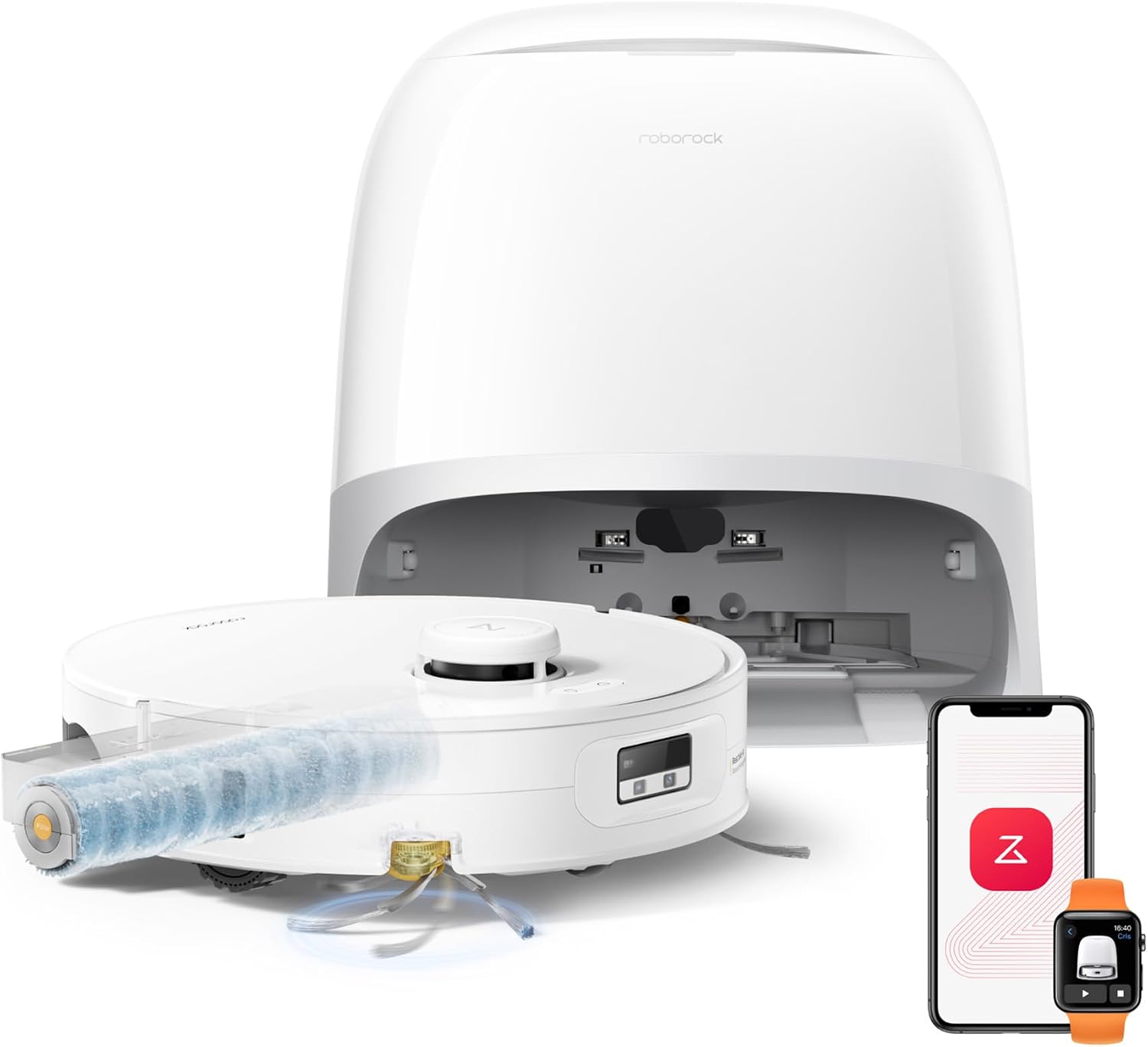
A robot vacuum mop is an autonomous puck. It suctions, drags a damp pad or spinning mop head, then returns to a dock that on higher-end models washes the pad, dries it, and empties the bin. Roborock's listing for the Qrevo Curv 2 Flow robot vacuum and mop describes this kind of multifunction dock, which is much of why it sits at $999.99 in our catalog, where it carries a 4.0 rating.
A wet dry vacuum is a stick you hold. It feeds clean water onto a spinning roller, scrubs under your weight, and pulls the dirty water into a separate tank you empty afterward. Pressure, fresh water, immediate extraction.
The roborock F25 GT wet dry vacuum and mop is the in-house comparison at $249.99. Flagging it honestly: its catalog rating is 2.9, which is low. Owner feedback across this product class tends to cluster on the same two complaints regardless of brand, edge gaps and maintenance.
Which one should you buy for your floor type and mess type?
Here's the decision laid out by what's actually happening in your house, not by spec sheet bullet points.
| Your situation | Better pick | Why |
|---|---|---|
| Sealed hardwood or tile, 1,200+ sq ft, mostly dust and hair | Robot vacuum mop | Frequency beats power. Daily light passes prevent buildup |
| Toddler or messy eater, food dropped and left to dry | Wet dry vacuum | Dried-on residue needs scrub pressure and fresh water, not a damp pad |
| Mostly carpet with one or two hard-floor rooms | Neither. Buy a cordless stick vacuum | You're paying for mopping hardware you'll barely use |
| Under ~700 sq ft apartment | Wet dry vacuum | A robot needs open runs and dock floor space to pay off |
| Pets that track in wet mud or knock over water bowls | Wet dry vacuum | Robots can smear a wet mess before they lift it |
| You travel, work long hours, hate chores | Robot vacuum mop | Scheduled runs are the entire value proposition |
| Budget under $350 | Wet dry or cordless | Cheap robots skip the self-wash dock, which is the part that matters |
What do most hard-floor cleaning guides get wrong?
Most comparisons line up suction in pascals against mop-plate pressure in grams, then declare a winner. That framing is close to useless here, because these two categories aren't competing on the same job.
The real split is loose debris versus dried-on debris. Loose debris, crumbs, hair, dust, sand, responds to frequency. Something passing over the floor five times a week with modest suction will leave your floors cleaner than a powerful machine you drag out every other Sunday. Robots win that outright, and they win it on schedule reliability rather than specs.
Dried-on debris is a different physical problem. Juice that evaporated, sauce that set, a dog's muddy paw print that dried into the grain of the tile. Lifting that requires mechanical agitation under load with a continuous supply of clean water. A robot dragging a slightly damp pad over it mostly rewets the edges and moves on, which is why owner reviews of robot mops across brands circle back to the same gripe: great on dust, disappointing on anything stuck.
The second thing guides skip is who empties what, which decides whether you keep using the machine at all. A wet dry vacuum hands you a tank of grey water and a roller to rinse after every session. Two minutes, every time, and it is the most common reason these end up in a closet. A self-washing robot dock moves that chore to roughly weekly. Fewer decision points, fewer skipped cleanings.
How much floor space justifies a $999 robot mop?
The self-washing dock is what you're paying the premium for, and it only earns its keep when the robot runs often enough that rinsing pads by hand would have become a real chore. Our working line is 900 square feet of hard flooring, cleaned at least four times a week. The arithmetic behind that line is simple: four runs a week is 208 pad rinses a year, and each one costs you a couple of minutes at the sink. That is the labour the dock deletes. Halve the usage to twice a week and you are at 104 rinses, while the gap between the $999.99 Qrevo Curv 2 Flow and the $249.99 F25 GT stays $750. At that point you are paying roughly $7 per rinse avoided, which is a bad trade.
Put plainly: in a one-bedroom condo with mostly carpet and a tight budget, the Qrevo Curv 2 Flow is the wrong purchase. Not a bad machine, just badly matched. Spend $249.99 on the wet dry vacuum, or put the money toward a strong cordless stick instead. The DREAME Z30 cordless vacuum is listed at 310AW with a 90-minute runtime at $299.99, and it carries a 4.4 rating in our catalog, the highest of any machine mentioned here.
What about hybrid vacuums that do both wet and dry?
There's a third shape: the cordless stick that also wet-cleans. The Dyson V9 Submarine wet and dry vacuum sits at $499.99 with a 3.0 rating, pairing a conventional vacuum body with a wet roller head. One charger, one storage spot. The catch: you swap heads per mode, so the "one machine" convenience partly disappears, and water capacity is limited by what you'll carry. Fine for a kitchen and bathroom, less so for 1,500 square feet of tile.
What do these machines still not handle well?
- Unsealed wood and some laminate. Both categories put water on your floor. Manufacturer guidance is the only thing to follow here, so check your flooring documentation and the vacuum's manual before using any wet mode.
- Room edges and corners. Rollers and mop pads both struggle against baseboards. This is the most consistent theme in owner reviews across the whole hard-floor category.
- Deep pile rugs. Robot mops lift or avoid them with varying success. Wet dry vacuums are simply not for carpet.
- Thick pet hair wrapping the roller. If that's your main problem, read our breakdown of what actually matters in cordless vacuums for pet hair before committing to either category.
Who should buy which?
Buy the robot vacuum mop if you have a large, mostly hard-floored home, want floors handled without thinking about it, and can absorb the dock premium. On the Qrevo Curv 2 Flow, the self-maintaining dock is the actual product.
Buy the wet dry vacuum if your floors get dirty in sudden, sticky events rather than gradually, which usually means young kids or a kitchen that sees real cooking. Accept the after-every-use rinse, and check recent owner feedback on edge cleaning before picking a model, since that 2.9 rating on the F25 GT is a signal worth taking seriously.
Skip both if your home is mostly carpet or under about 700 square feet with a budget under $350. A good cordless stick vacuum and a $15 spray mop will outperform a compromised version of either category, for less money.
This is editorial research based on published specifications, manufacturer product descriptions, and patterns in owner reviews. Prices and ratings reflect our catalog at time of writing and move around. For a related household problem, see our comparison of whether to use an air purifier or dehumidifier in a musty basement.
Editor's Pick
Affiliate link. We may earn a commission if you buy through it, at no extra cost to you.