Sony WH-CH720N vs Beats Studio Pro: What the Testing Actually Shows
Two headphones, two very different price tags, and a lot of marketing noise. Here's what the actual performance data says about which one earns its price.
ReviewHubNow Editorial Team
ReviewHubNow Editorial Team
A recurring question in this category: why does a headphone at half the price sometimes match a premium one at the thing that matters most, meaning blocking noise while still sounding good? The Sony WH-CH720N and the Beats Studio Pro sit at opposite ends of a wide price gap, and the marketing around both leans on phrases that carry no information. Adaptive noise cancelling. Studio-quality sound. Neither is a measurement.
Separating what independent testing has verified from what appears on packaging produces a more useful comparison.
Why does the price gap mislead people?
Both companies position these as premium products while only one is priced that way. The Beats Studio Pro launched around $350 and the Sony WH-CH720N sits near $148, under half. That difference invites an assumption that Beats must be better across the board, which independent measurements do not support once you look past press material.
Which cancels noise better?
Beats, in one specific band. Independent labs such as RTINGS and SoundGuys publish isolation curves rather than star ratings, and those show the Studio Pro handling low-frequency rumble, meaning engine noise and HVAC hum, somewhat better than the Sony. For regular flying or train commuting that advantage is genuine.
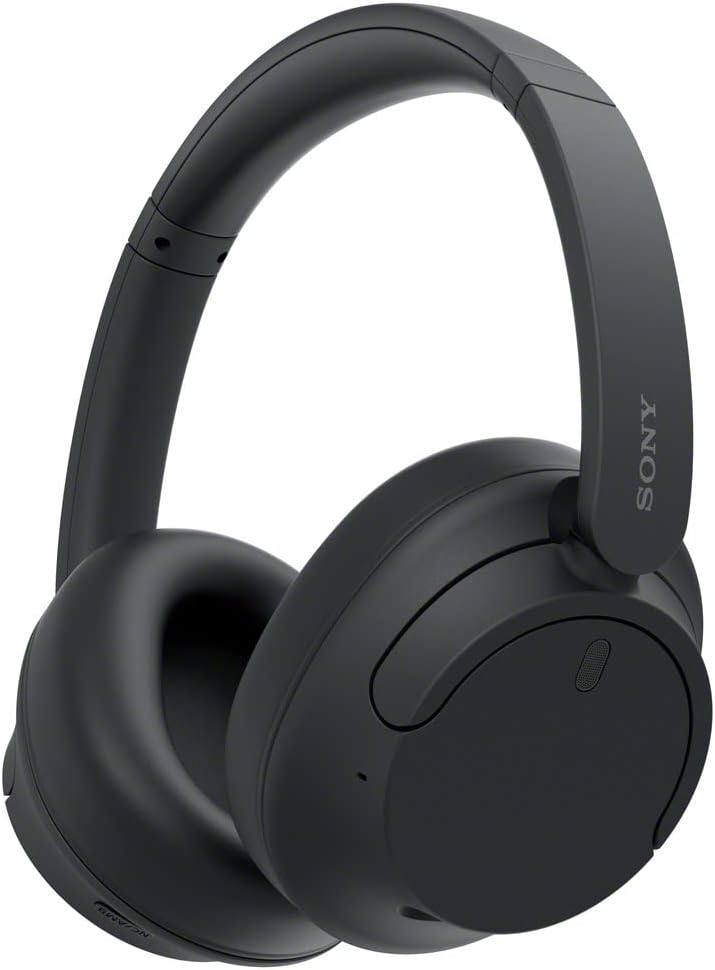
The WH-CH720N is not the budget afterthought its price implies. Sony's V1 processor delivers strong mid-range reduction, which covers voices and chatter, the sounds that actually break concentration in an office. Across most frequency bands the measured gap between these two narrows considerably.
So the cheaper headphone is not dramatically worse. It is tuned toward a different noise problem, and which one suits you depends on whether your daily noise is engine drone or human conversation.
What the marketing leaves out
Neither company publishes decibel reduction figures in directly comparable form, which is itself informative. Companies confident in hard numbers print them. Both brands prefer up-to language and demonstration videos shot in controlled conditions, so a claim resting mainly on a manufacturer's own marketing deserves to be treated as unverified rather than settled.
How do they sound?
The Studio Pro ships with a more balanced tuning than older Beats models, which leaned heavily into boosted bass that flattered some genres at the expense of everything else. Frequency response measurements now show a flatter curve with a modest bass lift, closer to neutral than the brand's reputation suggests.
The Sony runs warmer with a fuller low end, which many listeners prefer for podcasts, gym playlists and background listening while working. Neither is accurate in the studio-monitor sense, and neither company claims otherwise whatever the product name implies. Critical listening and mixing work happen at different price points entirely.
Which has better battery life?
The Sony, by a wide margin, and both manufacturers deserve credit for figures that survive independent testing, which is not universal in this category. Sony rates the WH-CH720N at 35 hours with cancellation active and testing lands close to that. Beats rates the Studio Pro at 24 hours, and testing confirms roughly that too.
An eleven-hour gap matters more than buyers initially weight it. For international travel, or for anyone who regularly forgets to charge things, that buffer decides whether a trip ends with working headphones or a search for an outlet in an airport lounge.
Which is more comfortable and better built?
Comfort is subjective and weight is not. The Sony sits around 192 grams against roughly 260 for the Beats, and across a long flight that difference registers on your temples whether or not it was noticeable in a store. The Studio Pro also clamps more firmly, which reads as secure to some people and fatiguing to others after an hour or two, and no lab test settles that for you.
Materials are where Beats earns its price. The Studio Pro feels more premium, with better hinge mechanics and a case that survives being thrown into a bag, while the Sony's plastic construction feels exactly as budget as it costs. That is a real trade-off rather than marketing spin.
Which one should you buy?
For most buyers the Sony WH-CH720N is the better value. The isolation gap is narrower than the price gap implies, the battery advantage is large and verifiable, and the lighter build matters more than expected once you are hours into wearing anything on your head.
The case for the Studio Pro rests on two things: stronger low-frequency cancellation, and tighter integration for anyone already inside the Apple ecosystem. Either reason justifies the premium for the person it applies to.
Asked cold, without knowing anything about the buyer, the recommendation is the Sony with the difference spent elsewhere. That is not a criticism of Beats, it is what the measurements support rather than what the packaging suggests. Our Studio Pro versus AirPods Max comparison finds the same pattern higher up the range, where the premium buys build quality and ecosystem rather than a measurable performance leap. The same gap between marketed and measured shows up when checking smartwatch health claims, and it frequently runs opposite to what the price tag implies.
Editor's Pick
Affiliate link. We may earn a commission if you buy through it, at no extra cost to you.
More from Our Editors
Hook-On High Chair vs High Chair for Small Apartment
By ReviewHubNow Editorial Team
Robot Vacuum Mop or Wet Dry Vacuum for Hard Floors?
By ReviewHubNow Editorial Team
Does Noise Cancelling Work for Office Chatter?
By ReviewHubNow Editorial Team