Does a Wireless CarPlay Adapter Work With Every Car? The Real Compatibility Rules
Before you buy a wireless CarPlay adapter, know this: it doesn't add CarPlay to your car — it just cuts the cord. Here's what that actually means.
ReviewHubNow Editorial Team
ReviewHubNow Editorial Team
Before you spend money on a wireless CarPlay adapter, here's what you need to know: the dongle cannot add a feature your car's infotainment system was never built to have. The most common misunderstanding in this category is that the adapter creates CarPlay support. It does not. It removes the cable.
That distinction matters more than any spec sheet or star rating.
What does your car need for a wireless CarPlay adapter to work?
Factory wired Apple CarPlay already built into the infotainment system. If you can plug in a cable today and get the CarPlay interface on your dash, an adapter will work. If your car has no wired CarPlay, no adapter on the market will give it to you.
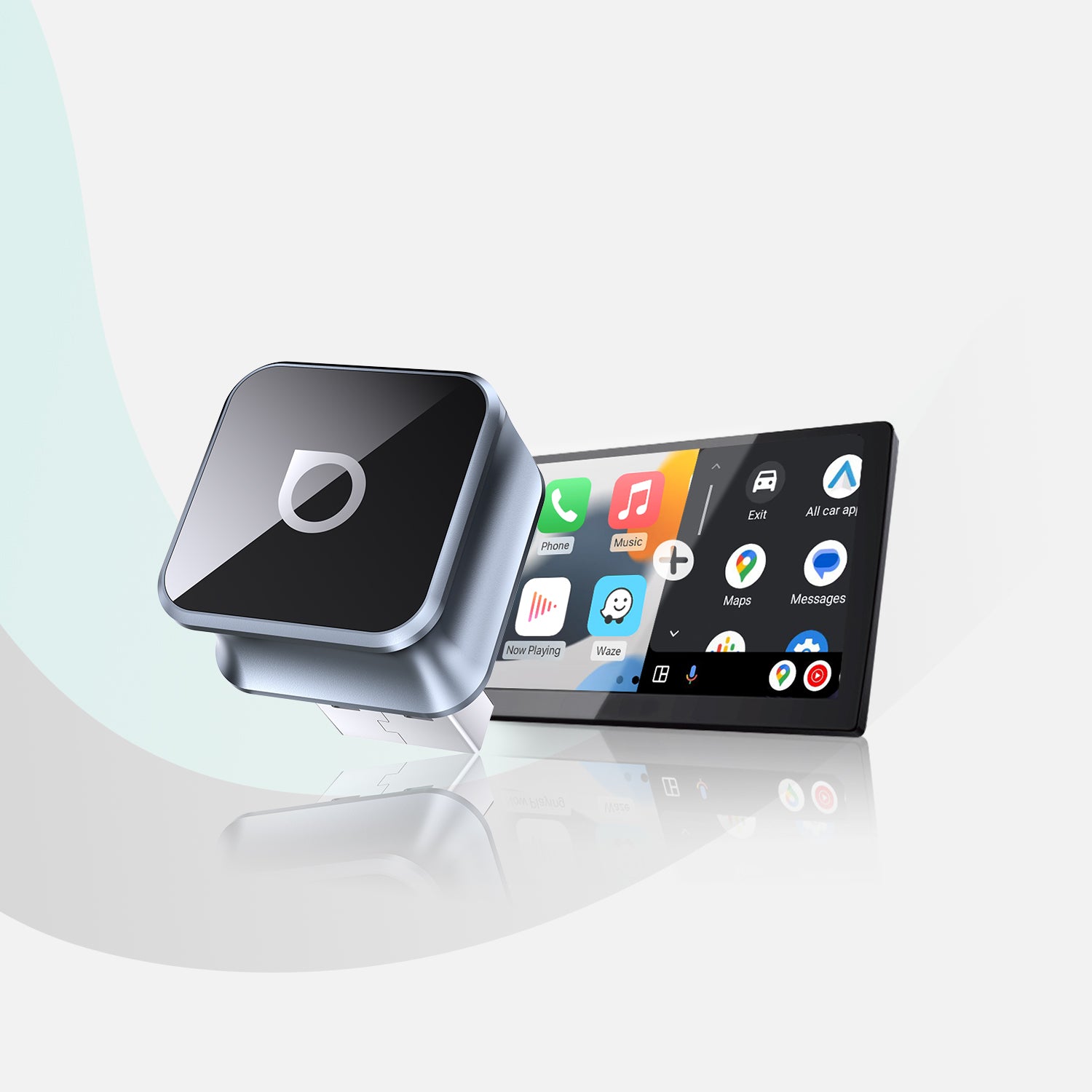
This is where listings get slippery, with photos of CarPlay running on screens from cars that never shipped with it, implying the dongle does the heavy lifting. What it actually does is act as a translator: it convinces your car's existing CarPlay module that a phone is connected over USB, then relays everything over Wi-Fi and Bluetooth. Clever engineering rather than a miracle.
What should you check before buying?
- Confirm wired CarPlay already works in your car. Most vehicles from 2016 onward with a touchscreen infotainment system have it, though not universally, since some trim levels skip it and some manufacturers gated it behind paid software activation for certain model years.
- Consider your car's wireless hardware generation. Older infotainment units, roughly pre-2018, sometimes carry weaker radios that produce lag, dropped audio or connection resets in parking garages and areas with heavy interference. That is your car's hardware ceiling rather than an adapter defect.
- Weight reconnection speed over setup demos. Every adapter connects acceptably in a launch video. What separates good units from junk is how quickly and consistently they reconnect on day forty.
- Android Auto support is not implied by CarPlay support. Some adapters handle both protocols well, while cheaper ones treat Android Auto as an afterthought with noticeably worse lag.
Which marketing claims should you ignore?
The most repeated claim in this category is compatibility with nearly every vehicle, which is technically true and practically misleading. It works with nearly every vehicle that already has wired CarPlay, a far smaller pool than the phrasing suggests, and the listings are aware of the impression they create.
Chipset quality is the real difference between a cheap dongle and a good one, and it is invisible in a product photo. Older Wi-Fi Direct chips struggle with audio sync, which shows up as a delay between tapping the screen and the interface responding, or as choppy call audio. Better units use current chipsets that handle interference and reconnection considerably more gracefully, and that is where the price difference goes rather than into packaging.
How much should you spend on a CarPlay adapter?
The bargain end of the market is a gamble, since the cheapest units are frequently older chipsets repackaged under new branding. Reliability improves substantially in the mid range, where you get faster reconnection, dual-band Wi-Fi and better thermal handling, which matters because these devices run warm and cheap ones disconnect when they overheat on long summer drives. At the top end you are mostly paying for brand and marginally faster boot times.
Anyone still deciding whether to make the switch at all should read our piece on wireless versus wired CarPlay. The summary: if factory wired CarPlay works reliably, going wireless is a comfort purchase rather than a fix.
Why do these adapters get one-star reviews?
Rarely because the hardware failed. The complaints overwhelmingly say the adapter did not work with a particular car, and in most of those cases the car never had wired CarPlay to begin with: an older base trim, a fleet-spec model, or a vehicle where CarPlay was a dealer option that was never activated. Checking the owner's manual, or simply plugging in a cable, settles it in five minutes and tells you what the listing will not.
The second common disappointment involves older vehicles. A car from the mid-2010s with genuine wired CarPlay will usually work with an adapter while showing occasional hiccups newer cars avoid, and that comes from the ageing Bluetooth stack in the vehicle rather than from the dongle.
What should you do before buying?
Test wired CarPlay in your own car first. If it works, buy a mid-range adapter with a current chipset and read reviews that specifically discuss reconnection speed rather than initial setup. If your car has no wired CarPlay, skip this category entirely, because what you need is a replacement head unit, which is a larger job and a larger budget.
Choosing between the cheapest option and a reputable mid-range one is not a close call. Lag and dropped connections on bargain units are not occasional irritations, they are the defining experience of owning one, and the difference in price is small next to the difference in daily frustration.
Editor's Pick
Affiliate link. We may earn a commission if you buy through it, at no extra cost to you.
More from Our Editors
Hook-On High Chair vs High Chair for Small Apartment
By ReviewHubNow Editorial Team
Robot Vacuum Mop or Wet Dry Vacuum for Hard Floors?
By ReviewHubNow Editorial Team
Does Noise Cancelling Work for Office Chatter?
By ReviewHubNow Editorial Team