What Our Research Found
We wanted to answer one question a buyer actually cares about. At $39.50 for 30ml, does this deliver a real copper peptide treatment, or is the 1% doing marketing work? Copper peptide serums from other brands routinely run $70 to $150 for 15 to 30ml, so the price gap is wide enough to raise an eyebrow.
The 1% refers to the copper peptide complex as a whole. DECIEM does not publish how much copper tripeptide-1 is actually inside that 1%, and no peptide in the formula carries a disclosed concentration.
The INCI list is unusually dense for the price: copper tripeptide-1, the Matrixyl-family peptides (palmitoyl tripeptide-1, palmitoyl tetrapeptide-7, palmitoyl tripeptide-38), acetyl hexapeptide-8, dipeptide diaminobutyroyl benzylamide diacetate, a multi-molecular-weight hyaluronic acid complex, amino acids and a lactococcus ferment lysate. Copper tripeptide-1 sits near the top of the list, which is consistent with the 1% claim, but everything after it is anyone's guess. DECIEM is also explicit that this shouldn't share an application with pure vitamin C or direct acids, because copper chemistry and those actives don't play nicely. That's a real constraint on your routine, not a footnote.
Bottom line
Treat it as a three-to-six-month project. Peptides work by signalling, so what you should expect is gradually better skin texture, a bit more bounce, and softening of fine lines, at a pace that never feels dramatic. At roughly $1.32 per ml with two-drop dosing, one bottle covers about ten weeks of once-nightly use. That makes a full trial financially painless next to the alternatives.
It's the right buy for someone curious about copper peptides, or for a retinoid user who wants a gentler alternate-night step. It's the wrong buy if your morning is vitamin C and your evening is acids, because you'd be squeezing this into a slot that barely exists.
How strong is the evidence behind GHK-Cu in a face serum?
Copper tripeptide-1, GHK-Cu, is the one peptide here with a substantial independent literature behind it. The PMC review we cite below describes GHK as a peptide isolated from human plasma and studied over several decades in wound-healing and tissue-repair contexts. According to that review, it appears to influence extracellular matrix remodelling, including collagen and glycosaminoglycan production, and to act on a broad set of gene-expression pathways. We're relaying that summary rather than verifying the underlying experiments ourselves. The catch a buyer needs to understand is that much of the cited work is in vitro, in animal models, or in wound-repair settings, rather than in randomised trials of a cosmetic serum applied to healthy photoaged facial skin. Human cosmetic studies exist, but they tend to be small, short and industry-funded. Plausible mechanism, decades of interest, weaker evidence for the exact claim on the bottle.
The Good & The Bad
thumb_up What We Loved
- check
Copper peptides at roughly a quarter of the usual per-ml price
Competing copper peptide serums frequently sit between $70 and $150 for 15 to 30ml, or roughly $4 to $8 per ml. At $39.50 for 30ml, about $1.32 per ml, this makes a genuine three-month trial affordable instead of a gamble.
- check
One bottle replaces a stack of peptide products
Copper tripeptide-1, the Matrixyl peptides, the neuropeptides and hyaluronic acid arrive in a single step. Fewer layers, fewer compatibility puzzles, and less pilling than running three separate serums.
- check
Genuinely lightweight, fragrance-free and oil-free
It absorbs quickly and sits fine under SPF or a cream once it's set. No added fragrance or essential oils, which matters if you're reactive, and which more expensive peptide serums get wrong surprisingly often.
- check
The brand publishes its full formula and its incompatibilities
DECIEM states outright what not to mix this with instead of pretending the serum plays well with everything. That kind of disclosure is rarer than it should be at any price.
- check
The hydration payoff arrives on day one
The multi-weight hyaluronic acid complex plumps immediately, which gives you something to like while the peptides do their slow work in the background.
thumb_down Honest Drawbacks
- close
No peptide concentration is actually disclosed
The 1% covers the copper peptide complex, not copper tripeptide-1 specifically, and every other peptide in the bottle is undisclosed. NIOD's Copper Amino Isolate Serum 1:1 names its copper tripeptide-1 percentage outright. Here there's simply no number to compare against.
- close
An established routine often has no free slot for it
Copper chemistry and L-ascorbic acid can't share an application, and direct acids are out too. If your mornings already belong to vitamin C and your nights to an exfoliant, this serum ends up on alternate nights, which halves your exposure and stretches a slow timeline even further.
- close
The blue-teal tint and tacky finish are real annoyances
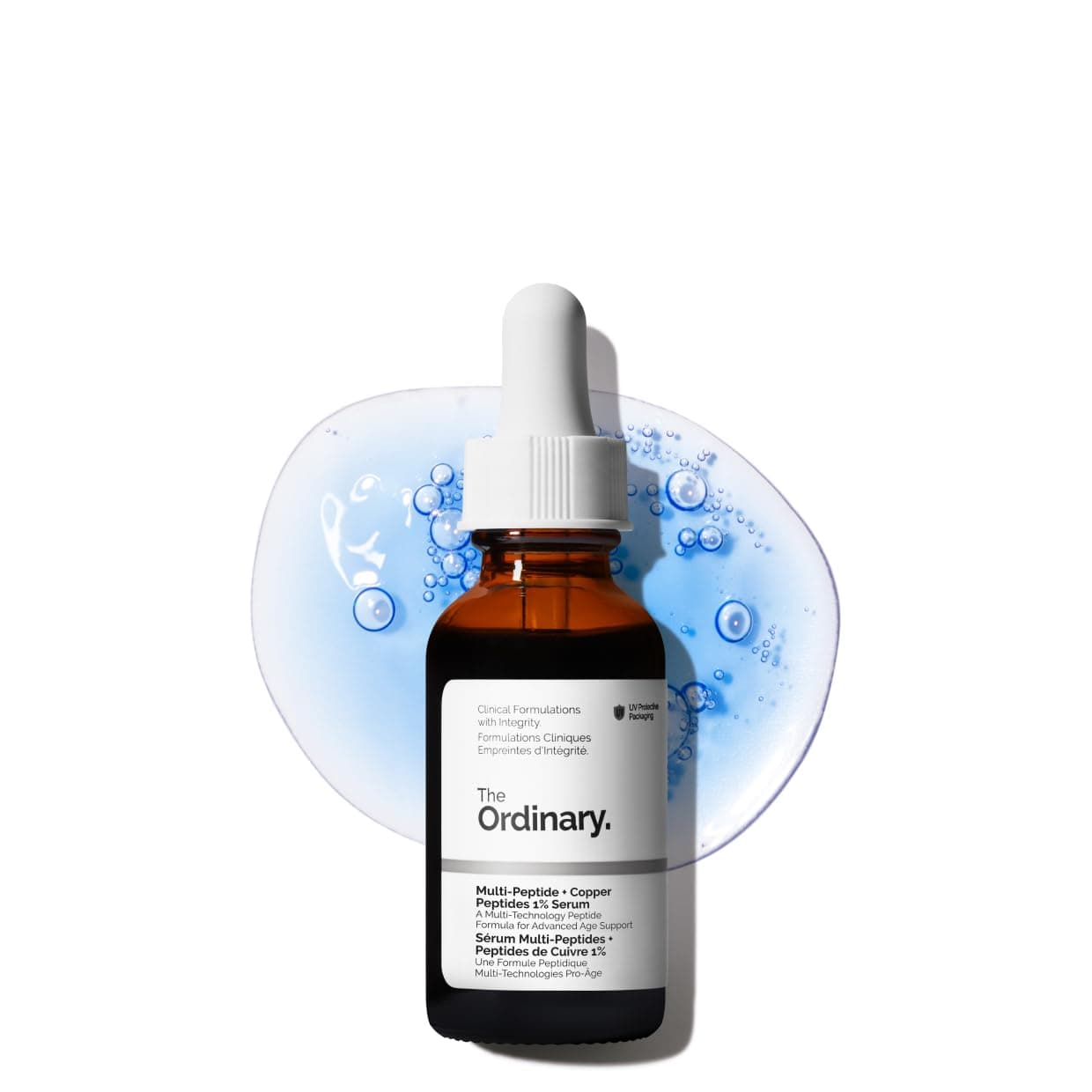
Copper gives the serum a distinct colour that can leave a faint cast on lighter skin until it dries, and the finish stays slightly sticky. Users regularly report pilling when a heavy cream goes on too soon, plus droppers that draw up less than expected.
- close
Results are slow and modest by design
Peptides signal, they don't resurface. Anyone expecting retinoid or acid-level change inside a month will be disappointed, and a meaningful share of the public reviews saying 'no difference' appear to come from trials shorter than eight weeks.
Technical Breakdown
Copper peptide complex (copper tripeptide-1 / GHK-Cu)
1% total complex, individual GHK-Cu level undisclosed
Matrixyl-family peptides (palmitoyl tripeptide-1, palmitoyl tetrapeptide-7, palmitoyl tripeptide-38)
Undisclosed
Acetyl hexapeptide-8 and dipeptide diaminobutyroyl benzylamide diacetate
Undisclosed
Multi-molecular-weight hyaluronic acid complex + amino acids
Undisclosed
Lactococcus ferment lysate (probiotic complex)
Undisclosed
How It Works
Peptides are short chains of amino acids that act as messengers rather than exfoliants or antioxidants. Copper tripeptide-1, better known as GHK-Cu, is the headline one. The rest are signal peptides marketed for collagen support and expression-line softening. Here's how to use the bottle without wasting it.
Start on clean, slightly damp skin
Apply after cleansing and any water-based toner, before oils, creams or SPF. This is a water-based serum, so it belongs early in the layering order.
Use 2 to 4 drops, once or twice daily
Two to four drops covers the face and neck. The texture is light but slightly tacky, so give it 60 seconds to set before layering moisturiser or it can pill under thicker creams.
Keep it away from vitamin C and direct acids
This is the one compatibility rule that matters, and DECIEM states it on the product page: no pure L-ascorbic acid, no direct AHA or BHA, no strong antioxidants in the same application. The practical fix is acids or vitamin C in the morning and this at night, or alternate nights.
Let the peptides signal over weeks
Copper peptides are studied for their role in extracellular matrix and wound-repair signalling. Visible change follows the skin's own remodelling timeline, so hold off on judging the bottle for at least two full months, ideally three.
Store it out of light and heat
The blue-teal tint comes from copper and can shift over time. Keep the bottle capped, away from a sunny bathroom windowsill, and finish it within a few months of opening.
How It Compares
| Feature | The Ordinary Multi-Peptide + Copper Peptides 1% Serum, 30ml | NIOD Copper Amino Isolate Serum 1:1 (CAIS), 15ml, also DECIEM-owned |
|---|---|---|
| Price / size | $39.50 for 30ml (~$1.32/ml) | Roughly $70-$80 for 15ml (~$5/ml), confirm current listing price |
| Copper peptide disclosure | 1% copper peptide complex; GHK-Cu share undisclosed | cancelStates a copper tripeptide-1 concentration for the formula, so you know what you're buying |
| Other peptides included | Matrixyl 3000 + Synthe'6 types, acetyl hexapeptide-8, SYN-AKE type dipeptide | Copper peptide focused, a single-active step with minimal supporting peptides |
| Routine compatibility | Avoid same-step L-ascorbic acid, direct acids, strong antioxidants | Same avoid-list; NIOD also directs users to apply it before other water-based steps |
| Texture / finish | Lightweight water-based, faint blue-teal tint, slightly tacky | Very light watery fluid with a pale blue cast; dries fast, less tackiness reported |
| Extras | cancelMulti-weight HA complex, amino acids, ferment lysate | cancelDeliberately minimal, no hydrators or supporting actives to speak of |
| Best for | First-time copper peptide buyers and budget-conscious routines | Buyers who want a stated copper tripeptide-1 percentage and will pay four to five times more per ml for it |
Frequently Asked Questions
Is The Ordinary Multi-Peptide + Copper Peptides 1% Serum worth it for fine lines?
Yes, if you want to try copper peptides without spending three figures. At $39.50 for 30ml it undercuts most copper peptide serums by 60 to 80 percent per millilitre, and it throws in Matrixyl-family peptides and hyaluronic acid as well. What you give up is certainty: no individual peptide concentration is published, so you're buying formula reputation rather than a verified strength.
How long does it take to see results from copper peptides on the face?
Two to three months at minimum, with texture and hydration shifting first. Peptides signal skin cells instead of exfoliating them, so firmness and fine-line changes follow the skin's own remodelling pace. The hyaluronic acid complex plumps within days, but that's hydration, and it fades once you stop applying it.
Can I use The Ordinary copper peptides with vitamin C or retinol?
If your mornings already belong to pure L-ascorbic acid, keep this serum out of that step. DECIEM advises against pairing it with vitamin C, direct acids or strong antioxidants in the same application. Retinol is generally fine on alternate nights, or after this serum has fully absorbed. Most people settle on vitamin C in the morning and this at night.
How much GHK-Cu is actually in the 1% copper peptide complex?
Undisclosed. Nobody outside DECIEM knows. The 1% describes the copper peptide complex as a whole, and DECIEM publishes no breakdown for copper tripeptide-1 or for any other peptide in the bottle. Ingredient-list position is the only outside clue, and position can't be converted into a number.
Is this serum safe for sensitive or acne-prone skin?
Generally yes. It's fragrance-free, oil-free and alcohol-free, which removes the usual irritation triggers, and copper peptides don't exfoliate, so stinging is rare. Patch test on the inner forearm for a few days anyway, and skip it entirely if you have a known copper sensitivity or broken skin.
How long does one 30ml bottle of The Ordinary peptide serum last?
Roughly 8 to 12 weeks at 2 to 4 drops once daily, or about 6 weeks if you use it morning and night. At $39.50 that's well under a dollar a day. Since peptide results need two to three months anyway, one bottle covers close to a full trial for most once-daily users.
library_booksReferences & Further Reading
Our reviews are informed by peer-reviewed research and authoritative health organizations. These sources provided context for this review:
- linkGHK peptide research overview — U.S. National Library of Medicine (PubMed Central)
- linkU.S. FDA — Cosmetics labeling and ingredient regulations
- linkThe Ordinary (DECIEM) — official product and formulation page
Editorial note: Links to external sources are provided for informational purposes. ReviewHubNow is not affiliated with these organizations and does not receive compensation for linking to them.
This is the most sensible entry point into copper peptides on the market right now, and the price is most of the argumen...
Based on our research and analysis, The Ordinary Multi-Peptide + Copper Peptides 1% Serum, 30ml scored 7.8/10. See the full verdict above for who it suits — and who should pass.
View Price on Amazon Canadaarrow_forwardVerify official availabilityWhat Owners Report
Recurring themes we found across public owner reviews.
Reviewers repeatedly describe skin looking smoother and more hydrated within a couple of weeks, with fine lines appearing softer after two to three months of consistent nightly use, and they note that the price makes long-term use realistic.
A recurring gripe is texture. The serum feels sticky until it dries, the blue-teal tint can leave a temporary cast, and it pills under heavier moisturisers or sunscreen if you don't wait a minute between layers.
Buyers regularly report confusion about layering, specifically whether they can keep their vitamin C or exfoliating acids, and several who saw no results describe stopping after only three or four weeks.
Thirty days is Amazon Canada's general returns window for most beauty items. It isn't a manufacturer guarantee from DECIEM, and we haven't verified it against this specific listing. Terms differ for third-party sellers and for opened cosmetics, which are handled case by case, so read the returns text on the store page before ordering.