What Our Research Found
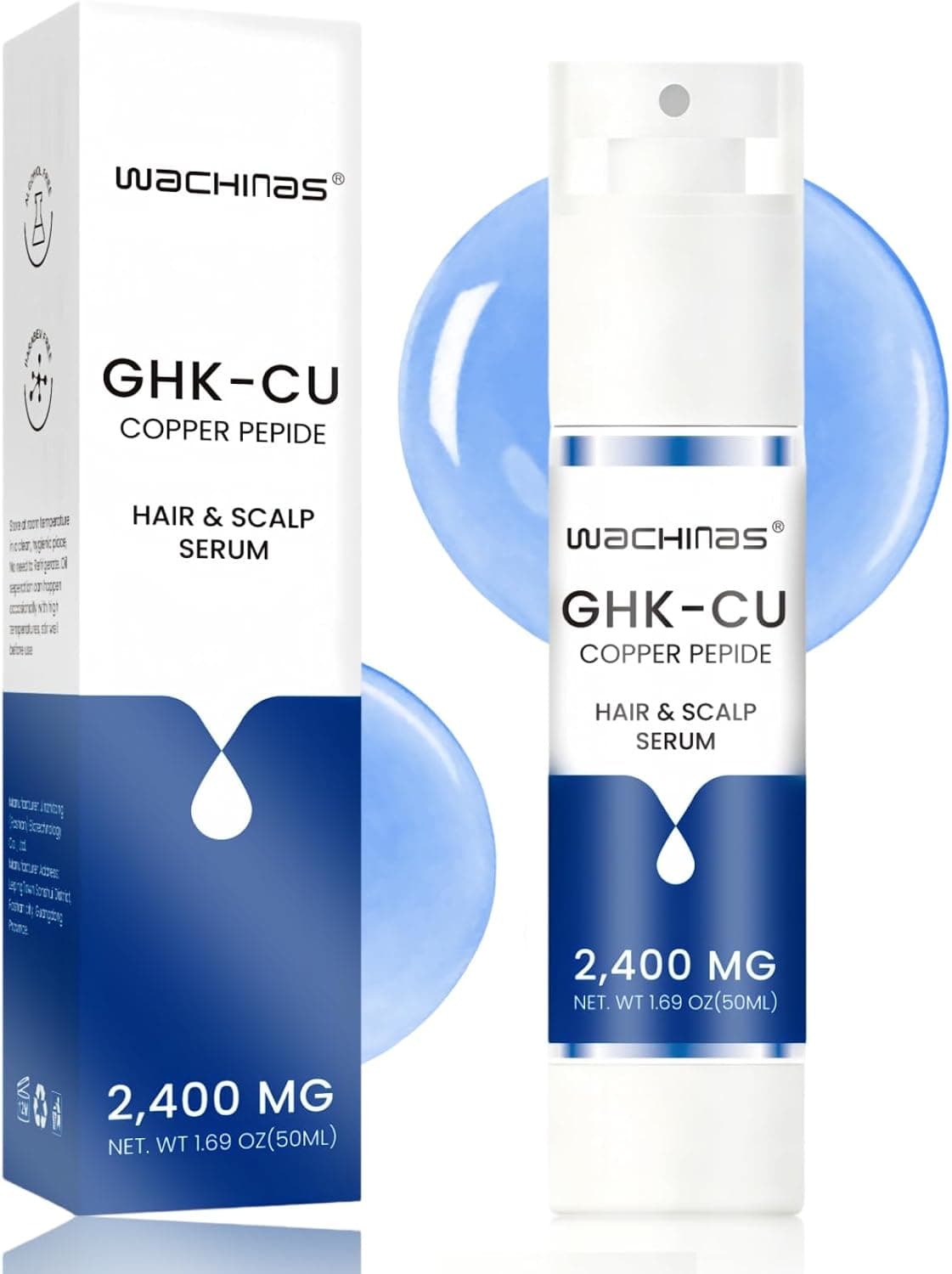
Single-ingredient serums bet everything on one trend. This formula hedges across the whole scalp-care watchlist instead: GHK-Cu for the peptide moment, caffeine and rosemary with their small-study followings, Redensyl's marketed trials, niacinamide's barrier support, and biotin for the label. We sorted the stack by evidence tier.
Ranked by evidence, the stack goes like this. Rosemary and caffeine carry small but real human studies suggesting modest benefit. Niacinamide supports scalp-barrier health. Redensyl leans on manufacturer trials. GHK-Cu offers mechanism plus hope. Topical biotin is mostly decoration, since evidence for topical benefit outside deficiency is minimal.
At roughly $30 CAD the shotgun approach has genuine logic. If several ingredients each contribute small effects on shedding, scalp condition, or hair appearance, a stack plausibly outperforms any single trend bet. The 4.8-star early aggregate suggests owners get exactly the soft benefits this class delivers: calmer scalps, fuller-feeling hair, an impression of reduced shedding. The trade is unavoidable. Attribution is impossible, and none of it reaches the evidence tier of approved treatments.
Bottom line
As a scalp-environment experiment, this is the portfolio version. You get more plausible attempts per dollar than single-peptide rivals like Copper Grow, and the same hard ceiling on what any of it can prove.
It fits an optimizer's rotation alongside proven care. Genuine thinning still starts at the dermatologist, and this rides shotgun.
Which ingredients in a GHK-Cu hair serum have real evidence?
This formula is a tour of scalp-care evidence tiers. Rosemary oil has small randomized human data suggesting benefit in the range of low-dose minoxidil for some users. Topical caffeine shows follicle-stimulation signals in lab work and small clinical studies. Niacinamide's skin-barrier credentials are solid, and they plausibly extend to scalp health. Those three set the formula's floor, and that floor is higher than most of this aisle manages.
The Good & The Bad
thumb_up What We Loved
- check
More plausible shots on goal per dollar
Five watchlist ingredients at roughly $30 CAD beats paying the same money for one, assuming each contributes a small effect.
- check
Two ingredients with real human signals
Rosemary and caffeine both carry actual small studies. The evidence is modest, but it exists, which is rare in this aisle.
- check
Scalp-environment benefits arrive either way
Niacinamide and the conditioning base leave scalps calmer and healthier-feeling even when the growth story goes nowhere.
thumb_down Honest Drawbacks
- close
Attribution is impossible by design
Five actives at once means never knowing which one worked. The convenience of the stack is exactly what confounds the experiment you're running on your own head.
- close
The headline ingredient is the least proven
GHK-Cu sells the bottle. Rosemary and caffeine carry the evidence. Marketing and science point in different directions on this label.
- close
Early reviews measure impressions, not outcomes
Owners report how their hair feels and looks over short horizons. That's the terrain placebo does its best work on, and it's most of what the star rating captures.
- close
Biotin is riding along
Topical biotin's evidence is thin to absent outside of deficiency. It's on the label for shoppers rather than for follicles.
- close
Redensyl's support comes from its own manufacturer
The trials behind it were run by the people selling the ingredient, and independent replication hasn't arrived. Treat it as a claim awaiting a second opinion.
- close
It demands months before it tells you anything
Daily application for three to six months, with dated photos, is the only way to read the result. That's a long commitment for a product that may turn out to have done nothing.
Technical Breakdown
GHK-Cu
Headline peptide
Rosemary extract
Botanical
Caffeine
Topical
Niacinamide
Barrier support
Redensyl + biotin
Marketed actives
How It Works
A standard leave-in scalp protocol. Months of consistency and dated photos, or you learn nothing.
Apply to the scalp in sections
Target scalp skin rather than hair lengths. Every ingredient in the stack aims at the follicle environment, and none of them do anything useful on a hair shaft.
Massage and leave in
Distribute with fingertips. Leave-in contact time is the whole delivery mechanism here, so don't rinse it out.
Run the three-to-six-month window
Hair cycles gate every real outcome. Consistency plus dated photos is the only honest scoreboard you have.
Keep proven care in front
If you're dealing with actual loss, clinically proven treatment leads and this stack follows.
How It Compares
| Feature | This GHK-Cu stack | Single-peptide serum (e.g. Copper Grow) |
|---|---|---|
| Actives | 5-ingredient stack | Copper peptides focused |
| Best-evidenced members | Rosemary, caffeine | GHK-Cu mechanism only |
| Attribution clarity | cancelNone, fully confounded | Cleaner single-variable |
| Price | ~$30 CAD | Similar |
| Best for | Diversified experimenters | Peptide-specific testers |
Frequently Asked Questions
Does a GHK-Cu copper peptide serum actually work for hair growth?
Partly, and not in the way the label implies. Rosemary and caffeine carry small human studies pointing to modest benefit. Niacinamide supports scalp health. GHK-Cu and Redensyl stay plausible but unproven for regrowth, and topical biotin is close to decoration. Taken together it's a reasonable experiment rather than a treatment.
Is a multi-ingredient hair serum better than a pure copper peptide one?
For most people running an experiment, yes. Five plausible small-effect ingredients at one price spreads the bet, and here the rosemary and caffeine happen to out-evidence the peptide on the front of the bottle. What you lose is attribution. If something improves, you'll never learn which ingredient did it.
How long before a scalp serum shows results on thinning hair?
Three to six months of consistent daily scalp application, because hair biology sets that clock and nothing on this label speeds it up. Judge by dated photos instead of mirror impressions. Scalp comfort improves within weeks and that improvement is real, but it's a conditioning effect, not evidence of growth.
Does topical biotin help hair growth or is it just marketing?
Barely, if at all. Biotin's hair reputation comes from correcting a deficiency with supplements, and evidence for topical benefit in people with normal levels is minimal. On this label it's a familiar name doing recognition work at the shelf while rosemary and caffeine handle the plausible lifting.
Can a copper peptide serum replace minoxidil or other proven treatments?
No. Approved treatments carry randomized-trial evidence this whole category lacks, and progressive thinning deserves that foundation plus a dermatologist's input before anything else. Serums like this one belong alongside proven care as a scalp-environment addition, never in place of it.
What's the biggest weakness of this GHK-Cu scalp serum?
Its breadth cuts both ways. Five actives mean diversified plausibility and zero attribution, and the ingredient printed largest on the label happens to be the least-proven member of the stack. You're buying a well-priced portfolio of maybes, which is worthwhile only when you frame it exactly that way going in.
library_booksReferences & Further Reading
Our reviews are informed by peer-reviewed research and authoritative health organizations. These sources provided context for this review:
- linkNIH/PubMed — Rosemary oil and hair research
- linkAmerican Academy of Dermatology — Hair loss treatment guidance
Editorial note: Links to external sources are provided for informational purposes. ReviewHubNow is not affiliated with these organizations and does not receive compensation for linking to them.
Think of this as the diversified version of a scalp experiment. Two ingredients have genuine small-study support behind ...
Based on our research and analysis, GHK-Cu Copper Peptide Hair & Scalp Serum with Biotin & Caffeine scored 7/10. See the full verdict above for who it suits — and who should pass.
View Price on Amazon Canadaarrow_forwardVerify official availabilityWhat Owners Report
Recurring themes we found across public owner reviews.
Fullness impressions and scalp comfort dominate the positive reviews, with owners describing hair that feels denser at the roots and flaking that calms down within a few weeks.
The measured minority reports the category's honest problem: months of consistent use with no change they would swear to in a photograph.
Stack-rationalists show up repeatedly, buyers who explicitly chose five plausible ingredients over one trendy peptide at the same price.
Amazon Canada's standard 30-day return policy